Reclaiming What Is Human
It was 10:00 on a Sunday morning.
I was sitting alone at the kitchen table, enjoying breakfast and looking out the window at the tomato plants in the garden.
In one minute, fifteen cars passed our house.
Fifteen.
Now, we live on a county road, so traffic is not unusual. Yet it seems to have increased dramatically over the last year or two. New developments have brought more people, more vehicles, and more noise.
Perhaps what struck me most was realizing how differently people experience these changes.
I have mentioned the traffic to Dennis and to neighbors. Most seem not to notice it at all.
I do.
I feel it in my bones.
The constant movement. The constant noise. The feeling that there is always something happening, somewhere, all the time.
Maybe I am unusually sensitive to it.
Or perhaps we have simply become accustomed to things that were never meant to be normal.
Light pollution that hides the stars.
The steady loss of forests and farmland.
The endless cycle of buying, consuming, and discarding.
The expectation that we should always be available, always connected, always entertained.
We hardly question any of it anymore.
Sometimes I wonder if we are drifting further and further away from what is naturally human.
Human beings were created for connection.
For meaningful work.
For community.
For gathering around a table.
For conversations that have depth.
For time spent outdoors.
For moments of quiet.
Yet so much of modern life seems designed to pull us away from those very things.
We spend hours scrolling through carefully curated versions of other people's lives. We compare ourselves to strangers. We fill every spare moment with noise.
Even when we are together, we are often somewhere else.
I am grateful for technology and the ways it has improved our lives. Advances in medicine, communication, education, and agriculture have brought tremendous good into the world.
However, convenience is not always the same thing as flourishing.
Progress is not always the same thing as well-being.
At some point, I found myself asking a simple question: is this making life better?
For me, the answer was often no.
It has taken me more than three decades to stop chasing a version of life that never felt quite right.
I no longer feel compelled to attend every event, keep up every appearance, or participate in every race society seems to be running.
The older I get, the more I find myself drawn to simpler things.
A Bible study around a kitchen table.
A picnic after church.
A sewing club.
A conversation with someone who is genuinely interested in how you are doing.
A customer telling me how a whole chicken became Sunday supper, and how the bones became broth for the week ahead.
Those conversations fill something deep within me.
There is joy in them.
There is meaning in them.
There is humanity in them.
Perhaps that is what I have been searching for all along.
Not a perfect life.
Not a quieter road.
Not even a different place.
Just a return to the things that make us human.
Real community.
Meaningful work.
Shared meals.
Wonder.
Conversation.
Stewardship.
Connection.
I do not think we need more noise.
I think we need more of that.
~ LO
The Rhythm We've Been Waiting For
I have been a homesteader for as long as I can remember.
A life with purpose has always drawn me in. Putting my hands in the dirt. Watching the stars at night. Working hard all day and feeling an overwhelming sense of gratitude when the work was done and it was finally time to take off your boots.
It was not until I became a mother that I felt called to intentionally reintroduce that way of life in a time and place where many people no longer see its value.
Some of my favorite memories were made on my uncle's farm.
I remember summer evenings sitting on the back porch with my great aunt and uncle, listening to stories and watching the day wind down. I remember early mornings, heading outside by 5:30 a.m., coming in around noon to cool off for an hour, and then heading right back out until supper.
I practically lived in the barn.
It was my favorite place to be.
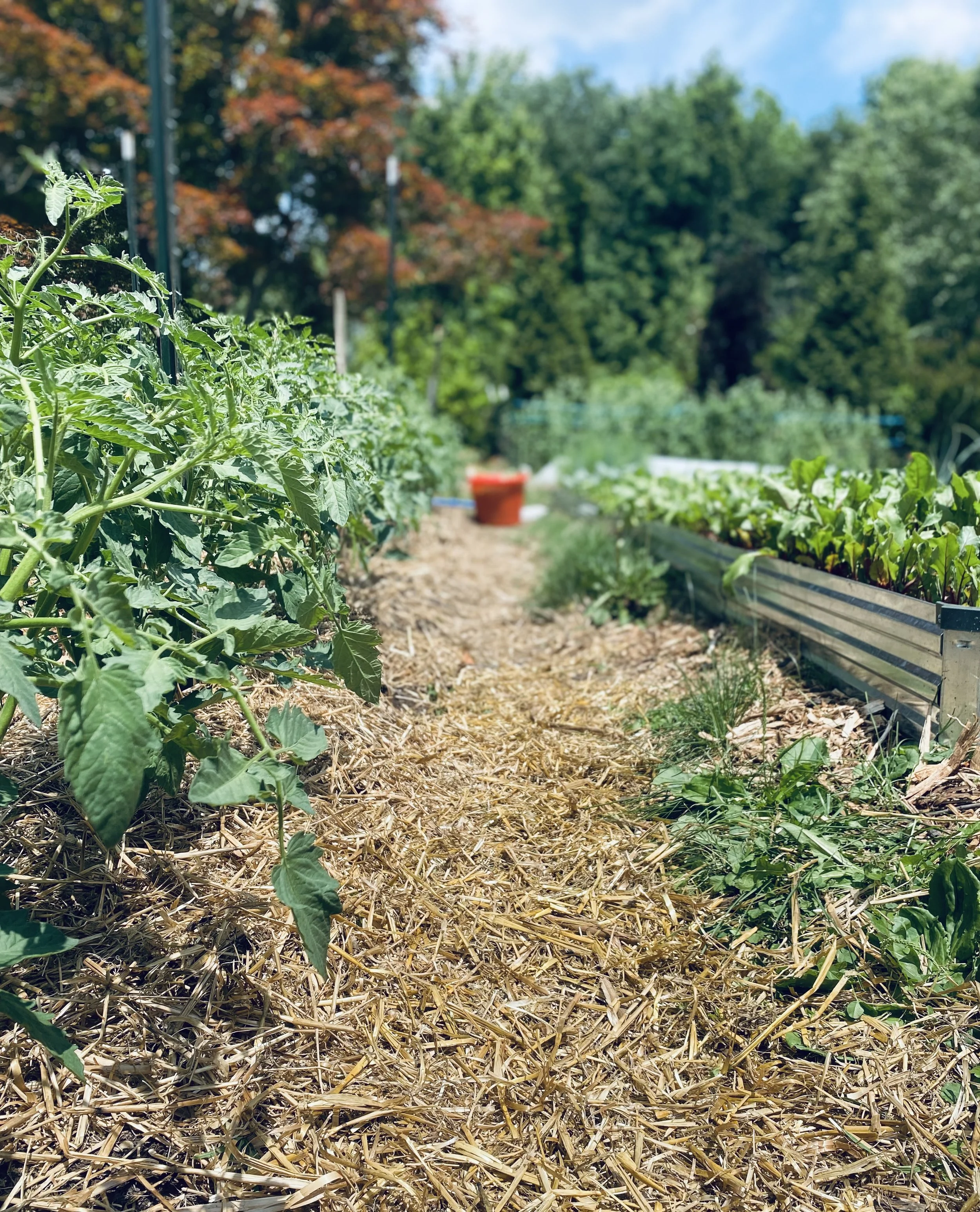
The other week, I was outside with our children, staking tomatoes and spreading wood chips between the rows. It was hard work, the kind that leaves you tired in the best possible way.
As we worked, my oldest talked and talked.
Then he said something that caught me off guard.
He told me it was all starting to make sense now. He said he was beginning to understand why we live the way we do and why I find so much value in it.
My heart sang.
For years, I have wondered if we were swimming against the tide.
There have been seasons when I questioned everything. Times when I wondered if we should sell it all and move back to a suburban neighborhood with a neatly trimmed lawn and a white picket fence.
Times when the work felt too hard.
Times when the sacrifices felt too great.
Times when I questioned whether our children would ever understand why we chose this life.
Today, I got my answer.
Not because the tomatoes were staked.
Not because the weeds were pulled.
Not because another task was crossed off the list.
I got my answer because I saw the roots beginning to take hold in the next generation.
The values. The work ethic. The appreciation for simple things. The understanding that a meaningful life is often built slowly, one day at a time.
Perhaps this is the rhythm we have been waiting for.
Not perfection.
Not ease.
Not a life free from hardship.
Just the quiet realization that the seeds we planted years ago are beginning to grow.
And that makes every storm worth weathering.
~ LO
Returning to the Heart of It All
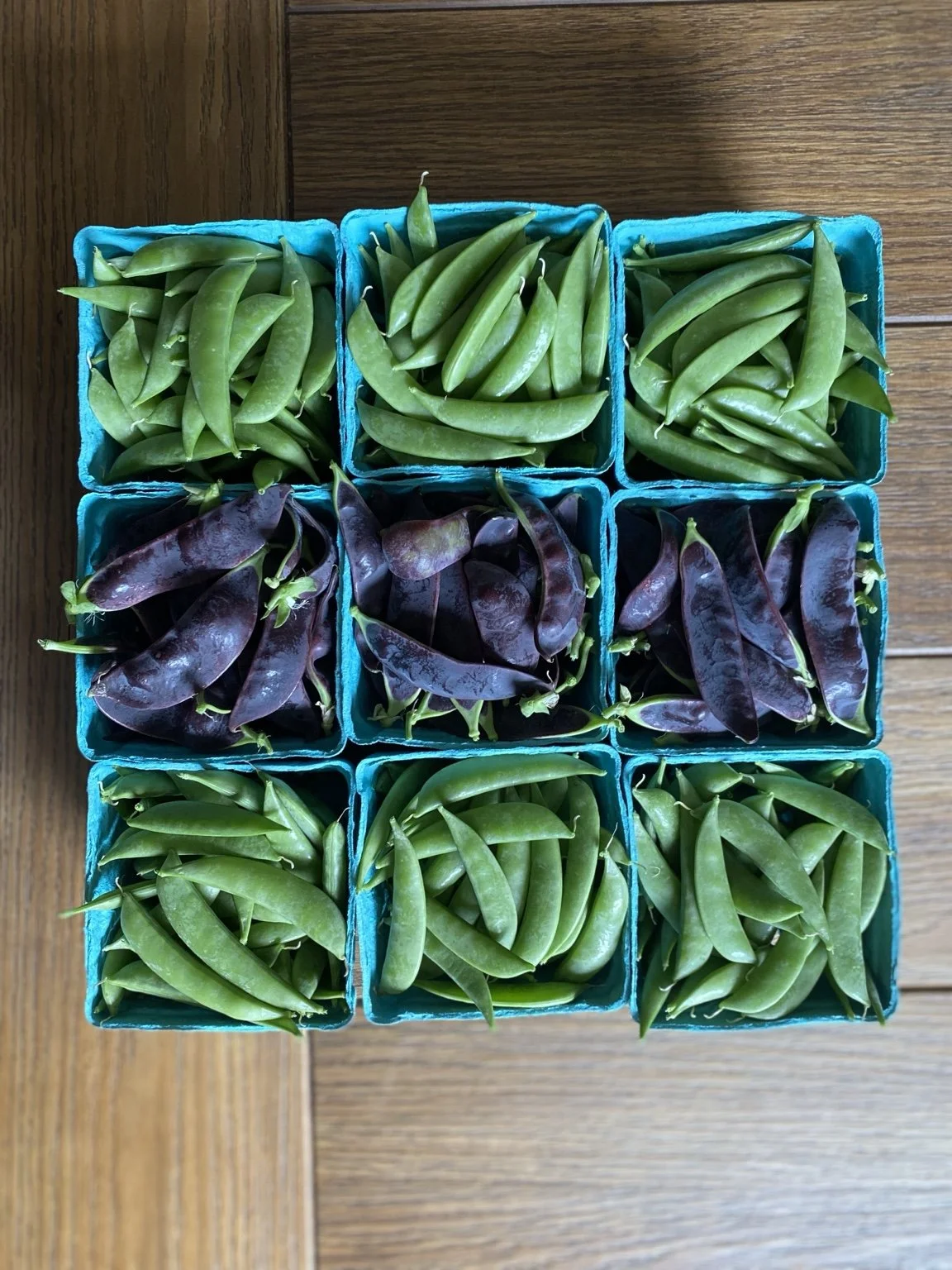
The other night, I was walking through the garden with our toddler beside me, picking peas from the vines.
My first thought was, Do we have enough peas for a few pints to sell at the market this weekend?
I stopped in my tracks.
Did I really just think that?
How did I get here?
Not because there is anything wrong with selling peas. We love farming, and we love sharing the fruits of our labor with our community. It is a privilege to grow food for other families.
What caught me off guard was that years ago my first thought would have been something entirely different.
Do we have enough for dinner?
That simple moment has had me reflecting on why we started this journey in the first place.
Mckaiden Farm was never supposed to be about maximizing production, filling every market slot, or squeezing every possible dollar out of a crop. It began because we wanted to feed our family well. We wanted our children to know where their food came from. We wanted to spend our days learning old skills, caring for animals, and growing nourishing food.
Somewhere along the way, as many small farms do, the balance shifted.
When you start selling what you grow, there is always pressure to produce more. More customers. More products. More markets. More efficiency. More revenue.
There is nothing inherently wrong with any of those things. A farm needs income to survive.
The challenge is making sure the business does not slowly crowd out the very reason you started.
Lately, I have been wrestling with that reality.
New Jersey is not an easy place to farm. Not because farmers here are unwilling to work hard, but because the logistics and economics can be overwhelming.
Insurance costs continue to rise. Inspection fees add up. Market fees add up. Equipment costs add up. Regulations grow more complex each year. For small farmsteads trying to generate supplemental income while feeding their own families, the weight can feel crushing at times.
Many of these regulations were created with good intentions. However, they often seem designed for larger operations and can place an enormous burden on small producers.
Sometimes it feels as though there is very little room left to simply farm.
To plant a garden.
To raise a few animals.
To sell a little extra.
To breathe.
I do not have all the answers.
What I do know is that I never want the business side of farming to completely overshadow the heart behind it.
I never want to walk through the garden and forget that before those peas are a product, they are food.
Before they are inventory, they are nourishment.
Before they are income, they are part of the reason we started this journey.
I still love this life.
I love the community we have found through it.
I love sharing good food, knowledge, and experiences with others.
Perhaps this season is simply reminding me that growth is not always about doing more. Sometimes growth means returning to what mattered in the first place.
~ LO
A Letter to a New Homesteader
Before I get too much into the nitty-gritty, I want to tell you something I wish more people would say:
You do not have to do it all.
In fact, trying to do everything at once is one of the quickest paths to burnout. You can only keep so many pots on the stove before they start to boil over.
When you are first starting out, everything feels exciting. The possibilities seem endless, and it is natural to want the garden, the livestock, the sourdough, the pantry shelves lined with home-canned food, and the picture-perfect farmhouse life all at once.
I want to gently encourage you to resist that urge.
Before we go any further, I think it is important to say that homesteading does not have to look like a farm. It does not require acreage, livestock, or even a backyard.
Homesteading can be a pot of herbs on an apartment balcony. It can be learning to cook a meal from scratch. It can be choosing to support local farmers, preserving seasonal produce, or simply making intentional decisions about the food that nourishes your body and your family.
At its heart, homesteading is less about where you live and more about how you live. It is about stewardship, learning new skills, and taking an active role in caring for yourself, your family, and your community.
You do not need to homeschool, cook every meal from scratch, grow a massive garden, preserve all your food, raise your own meat, bake sourdough, and line-dry your laundry to be doing things "right."
All of those things are wonderful. Many of them are worth pursuing. However, they are also incredibly time-consuming, and trying to do everything at once often leaves little room to actually enjoy the life you are working so hard to create.
Start Small in the Garden
Let’s begin with the garden.
Seed catalogs can be dangerous places.
Those beautiful pictures make it easy to convince yourself that you need twenty varieties of tomatoes and every interesting vegetable you have never heard of. Trust me, you do not.
If this is your first year growing food, choose a handful of crops your family genuinely enjoys eating.
Plant a few cool-weather favorites like peas and lettuce. Transition into summer with a good slicing tomato and perhaps a sauce or canning variety. Scallions and green beans are productive, easy crops that fit into almost any garden.
Most importantly, grow food you will actually eat.
There is no prize for growing the most unusual vegetables. The goal is to feed your family, build confidence, and learn new skills one season at a time.
Also, look to see if your county or land-grant university offers a Master Gardener program. You can learn an incredible amount from these programs and the volunteers who support them.
Choose One Livestock Project
Next, let us talk about livestock.
Before you bring home a single animal, find a veterinarian who works with food animals or livestock, if at all possible. It may take some effort, but having veterinary support established before there is an emergency is one of the smartest things you can do.
I would also encourage you to find a mentor, someone with real experience raising the type of animals you are interested in. Social media should never replace hands-on guidance from knowledgeable producers.
When it comes to livestock, start with one project.
A small flock of laying hens is often a wonderful place to begin. Learn their needs. Learn how to keep them healthy. Learn what works on your property.
You do not need layers, meat birds, a hatchery project, dairy goats, and feeder pigs all in your first year.
Get good at one thing before adding another.
The animals deserve that, and so do you.
Do Your Homework
Read. Research. Ask questions.
Seek information from credible sources.
Extension offices, universities, breed associations, veterinarians, and experienced producers are excellent places to learn. Social media can be entertaining, but it is not always accurate.
The same principle applies when purchasing animals.
A bargain animal is not always a bargain.
Every species has diseases and health challenges that can be introduced to your farm. Some are easily treated. Others are not.
Many livestock diseases are purchased and brought onto a property unknowingly.
Buy animals from reputable breeders whenever possible. Ask questions. Request health records. Learn about testing programs.
We have invested heavily in purchasing healthy animals with years of health and biosecurity data behind them, and we continue those testing programs today because protecting the herd is worth it.
Build a Sustainable Home
A homestead should support your family, not consume it.
Meal prep when you can. Shop locally. Trade with neighbors. Find shortcuts that make life easier.
Perhaps that means baking several loaves of bread at once and freezing them. Perhaps it means buying produce from another local farm when your garden does not produce enough. Perhaps it means asking for help.
Last year, during harvest season, I had enough time to wash our laundry but not enough time to fold it. So I paid someone to help.
And you know what?
I am not ashamed of that at all.
Sometimes the most productive thing you can do is recognize where your time is best spent.
Do Not Chase the Highlight Reel
One of the hardest lessons for new homesteaders is learning not to compare themselves to what they see online.
Social media often shows the beautiful moments: the fresh bread, the overflowing harvest baskets, the adorable baby animals, and the neatly organized pantry shelves.
What it does not always show are the early mornings, the heartbreak, the muddy boots, the financial sacrifices, the failed crops, the predator losses, the long days, and the exhaustion.
This life is beautiful.
It is rewarding.
It is full of blessings.
It is also hard work.
The goal is not to keep up with someone else's version of homesteading. The goal is to build a life that works for your family, your property, your budget, and your season of life.
Take it slow.
Remember that every experienced homesteader was once a beginner. None of us started with the garden, the livestock, the pantry, and the skills all at once.
Learn one skill at a time.
Celebrate small victories.
Give yourself permission to grow gradually.
The homesteaders who last are rarely the ones who try to do everything. More often, they are the ones who build carefully, patiently, and steadily over many years.
While "slow and steady" does not mean easy, it does mean sustainable.
That is what gives this lifestyle staying power.
That is what allows you to still love it ten years from now.
Because at the end of the day, the point is not to create a picture-perfect homestead.
The point is to create a life you can actually enjoy.
~ LO
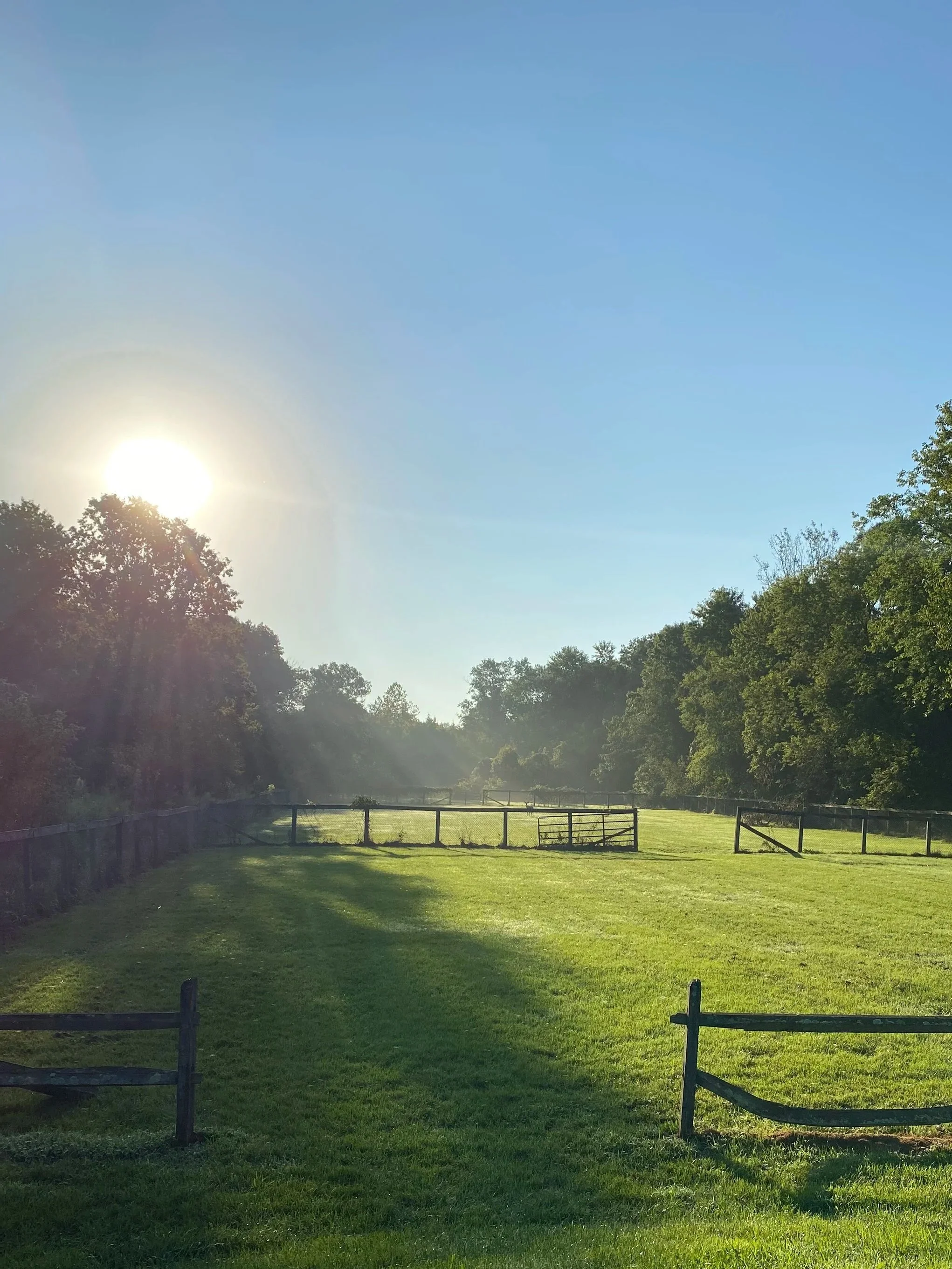
How We Got Started
What started as a small suburban homestead slowly grew into Mckaiden Farm. This is the story of how our family found purpose, peace and community through farming, food and living more intentionally.
Agriculture has been part of my family history for generations. Like many families before us, homesteading was not considered a trend or lifestyle. It was simply normal living. Shopping local, growing a garden, preserving food and doing things by hand were meaningful parts of family life.
While there are no multigenerational farms still operating in my family today, farming has always quietly remained part of our story. My great great grandparents were dairy farmers in Potter County, Pennsylvania. That farm lasted for three generations before eventually fading away with time.
Years later, my uncle, who was born and raised in South Jersey and worked successfully as an architect, decided to leave behind the constant pace of suburban life and purchase a farm in the Pennsylvania Wilds. He operated a cow calf beef farm, raising cattle and calves before they moved on to other farms for finishing. It was there, during summers spent with my grandmother at my uncle’s farm, that I truly fell in love with farming. To this day, it remains one of the places where I have felt the most peace.
As I grew older, I followed the path many people expected. I went to school, earned my nursing degree, later completed my master’s degree and eventually earned my Doctor of Nursing Practice degree. I have now worked in the nursing profession for 14 years and as a pediatric nurse practitioner for over ten years.
No matter how hard I tried to suppress it, something about the slower and more intentional way of living I experienced on the farm always stayed with me.
Working in primary care pediatrics gave me the opportunity to care for children from infancy through young adulthood. Over time, I began noticing troubling patterns that became impossible to ignore. Children were struggling with high cholesterol, fatty liver disease, abnormal weight gain, anxiety, overstimulation, excessive screen time and very little connection to the outdoors or the natural world around them.
At the same time, I could always see the difference in children whose families intentionally slowed down. Children who spent time outside, engaged in hands on play, helped in the kitchen or garden and lived more connected to the world around them often carried themselves differently. Even as toddlers, you could see it.
It was during those years that I realized our family wanted to walk a different path.
In our small suburban neighborhood, I started cooking more from scratch, growing a garden and dreaming about the family milk cow I had wanted ever since I was eight years old walking through the McKean County Fair. Slowly, we began building the life we longed for.
Leaving family and familiarity behind would not have been easy, and those ties kept us rooted here in South Jersey even while we longed for a quieter and more rural way of life. In time, we were blessed with the opportunity to purchase a small homestead from a close friend on the outskirts of the town I was raised in. It was there that Mckaiden Farm truly began.
What started with chickens and gardens slowly grew into miniature cattle, Nigerian Dwarf goats, flowers, herbs and the simple rhythm of learning how to steward land and animals well. We were not trying to create a business at first. We were simply trying to create a healthier and more grounded life for our family.
Over time, we felt a growing calling to serve our community in the same way we hoped to provide for our own family, with natural food raised with intention the old fashioned way.
We participated in a beginner farmer program, experienced the heartbreak of losing leased farmland and eventually found ourselves returning to our homestead roots. Today, we continue farming on a small scale here in Moorestown, New Jersey, doing our best to use this land thoughtfully to nourish both our family and our community.
It has been beautiful, exhausting, humbling and deeply meaningful.
Some days, it still feels like we live between two worlds, balancing modern life while longing for a slower and more connected way of living. Living on a busy county road outside growing towns, we sometimes feel a little out of place. Deep down, we know this life matters.
Several years ago, our oldest son asked us, “will we be a multigenerational farm one day?”
That question has stayed with us ever since.
We hope the answer is yes.
Not because farming is easy, but because we believe this work matters. We believe good food matters. We believe community matters. We believe children deserve connection to nature, to real food and to meaningful work. We believe there is still value in doing things slowly, carefully and with purpose.
Thank you for being here and for supporting our small family farm. Whether you shop with us at market, order from our farm store or simply follow along on this journey, please know that we pour our hearts into this work because we truly believe in its importance.
We are so grateful you are here to watch this story unfold.
Blessings,
Lauren